
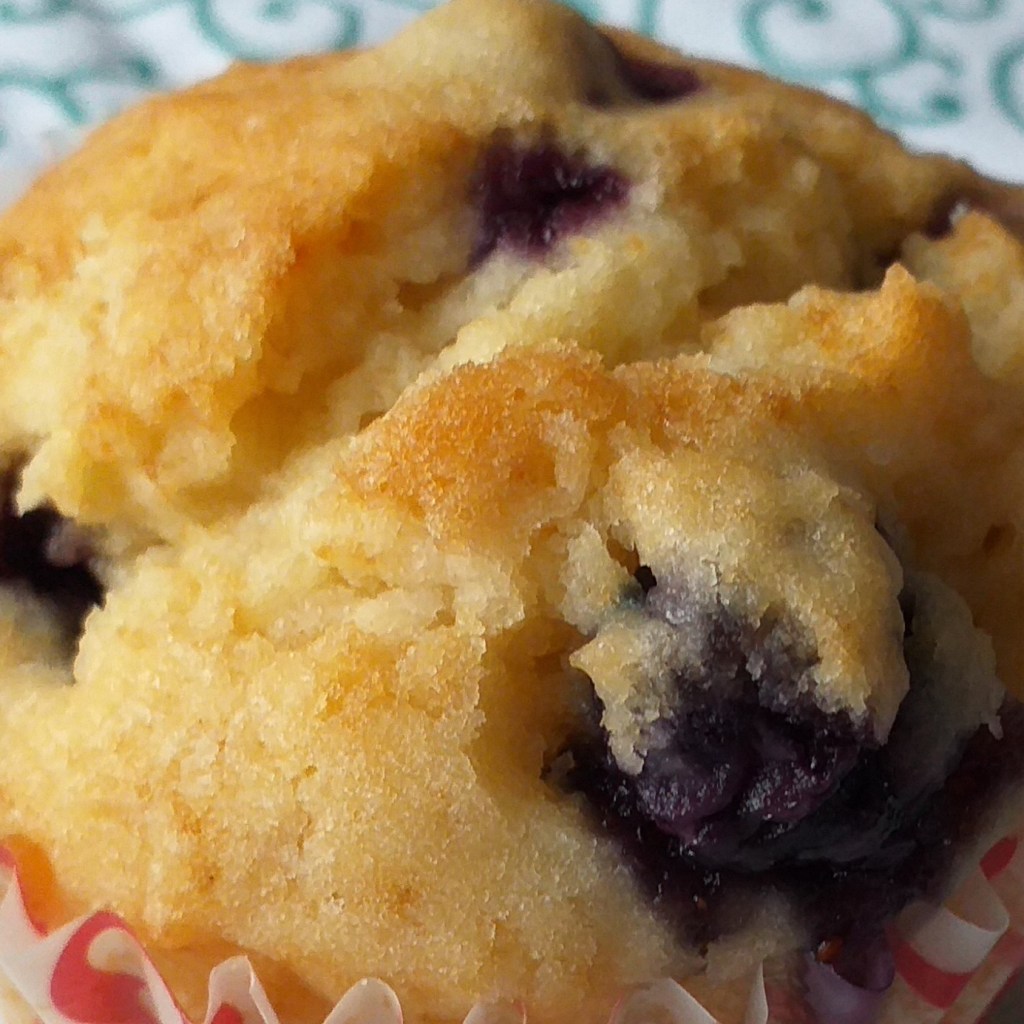
I’ve always wanted to try making blueberry muffins but never seemed to be able to get the texture right. They would either turn out rubbery, tough, tasteless or dry. Then I found this recipe by Paul Hollywood in his book, Bake. Compared to most muffin recipes, this one uses the rubbing in method, which is normally used for flaky pie pastry or biscuits. I adapted this recipe and am happy to report that I’ve finally found a method to make blueberry muffins that are tasty, tender and fluffy, with a good height. The muffins that I made using this method were not dense at all, and the blueberries did not sink to the bottom. To see how the rubbing-in method is done, watch the video below.
To use this method, it’s important that your butter be cold when you start the rubbing in, so that it will remain as large particles and don’t melt completely when mixed into the flour. This way, you will get a crumbly, melt in the mouth effect. Rubbing in the fat into the flour helps to coat the grains of flour with the butter, to prevent too much water from the liquid ingredients getting into the flour — thus avoiding the stretchy texture from gluten formation. So texture-wise, the muffins will be more like cake than bread. But they will still be dense enough to carry the weight of the blueberries.
For this recipe, you don’t need to use a mixer or food processor. In fact, I don’t recommend it. The flour/butter mixture don’t need to be fine like powder. It just needs to look like breadcrumbs. Just two mixing bowls. a whisk, spatula and your fingers are all you need to mix the ingredients.
Recipe
Blueberry Muffins

Makes about 24 pieces
INGREDIENTS
550g plain flour
5½ tsp baking powder
230g fine-grained sugar
1 tsp fine salt
2 large eggs (about 70g each)
200ml fresh milk
350 cold unsalted butter, diced (see notes)
1 tsp vanilla extract
230g blueberries
METHOD
- Preheat oven to 180˚C.
- Prepare two 12-hole muffin trays with paper cases.
- In a large bowl, whisk together flour, baking powder, sugar and salt.
- In another bowl, beat the eggs with the milk and vanilla extract.
- Add the cold butter cubes to the flour mixture. Using fingers, rub the butter into the flour until the mixture resembles breadcrumbs. Use fingers of both hands and work quickly.
- Pour the liquid mixture into the flour/butter mixture. With a whisk or spatula, stir until just combined, but don’t overmix.
- Using two tablespoons, fill in muffin cases with the batter until about ¾ full. You might get 23 or 24 muffins.
- Bake muffins for 20 minutes. Check at this point. Insert a skewer into the middle of one muffin. If it comes out clean, your muffins are done. If not, give a few more minutes. Your muffins should look well risen and golden.
- Let muffins cool in the tray for a few minutes before transferring to a wire rack to cool completely.
- Enjoy!
Watch the video:
NOTES
- You can use self-raising flour, but you still need to add 1 tsp of baking powder to achieve a good height for the muffin.
- Low fat milk can be used, but the flavour won’t be as rich. Use full-fat for the best flavour.
- Prepare the butter beforehand. Take it out of the fridge and leave it on the kitchen counter for a few minutes until it is soft enough to cut. Cut into 1 cm dice and put the butter back into the fridge or freezer to firm up again. Take out the butter only when you are ready to use it.
- The number of muffins you get will depend on the size of your muffin cups. I got 23 medium-sized ones from standard muffin cases. You can probably get 12 large or ‘jumbo’ ones from this recipe.
- For large muffins, add about 5 minutes to the baking time.
Latest Posts
- The Benefits of Using Frozen Broccoli in Your Meals

- Blueberry Muffins (with video)

- Plastic Canvas Coaster (with Video Tutorial)

- How To Avoid Panic Buying

- Honey Joys (Cornflakes Cookies)


 LADLE AND THREAD